In the mid-20th century, China stood as a nuclear-armed communist state with immense human and economic potential. Yet its leadership, led primarily by Chairman Mao Zedong, made catastrophic errors that deeply affected millions of lives.
One of these disasters, the Great Leap Forward, weakened Mao’s position within the Communist Party. But although sidelined, he was far from finished. His influence remained powerful, and he soon began planning a dramatic comeback.
The Little Red Book and the Road to Revolution
In 1964, Mao published Quotations from Chairman Mao—the famous Little Red Book, containing 427 statements summarizing his ideology. It was printed more than a billion times, becoming one of the most distributed books in history.
This publication helped re-establish Mao’s authority, preparing the ground for his next major political move.
1966: The Cultural Revolution Begins
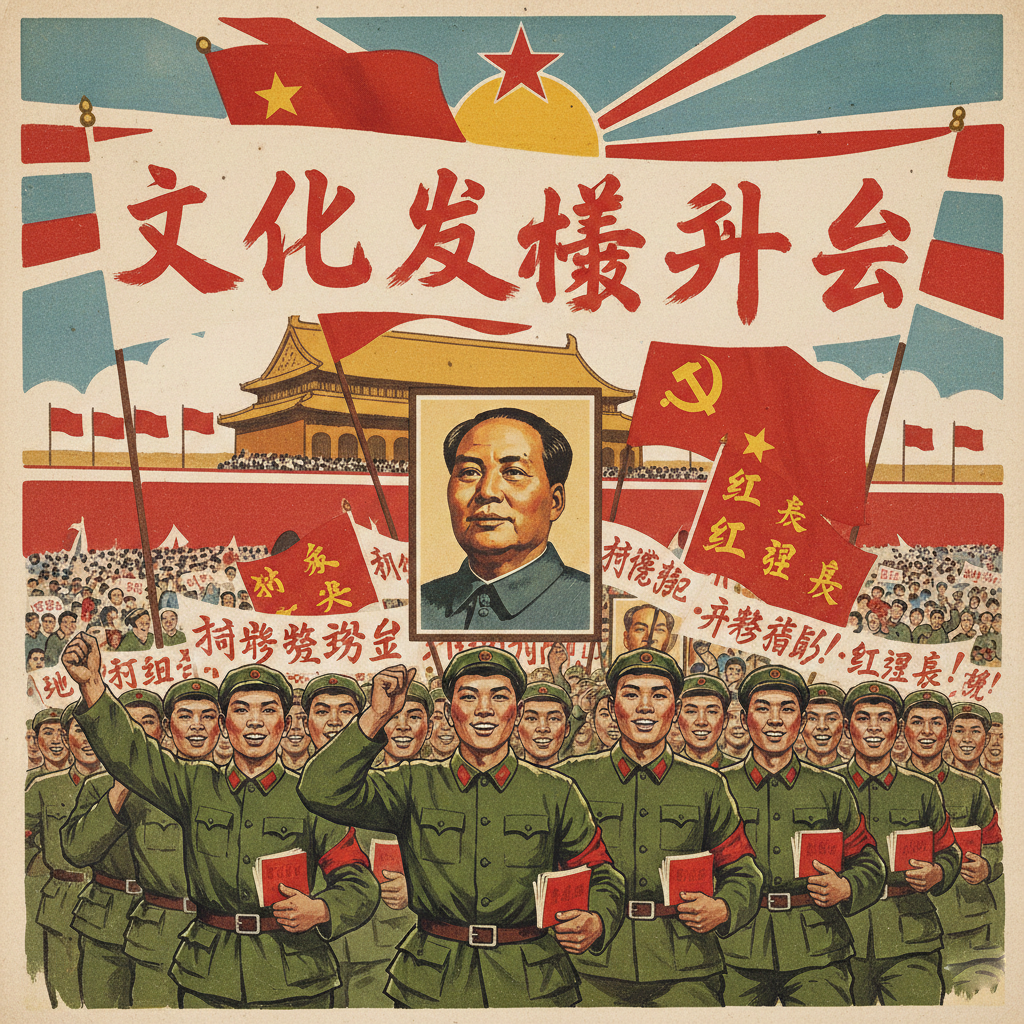
By 1966, Mao feared that revolutionary zeal within China was fading. Believing that hidden enemies were weakening socialism from within, he called for a Cultural Revolution—a permanent struggle against “old thought, old culture, old habits, and old ideas.”
Students responded with enthusiasm, forming militant groups known as Red Guards. Wearing red armbands and carrying the Little Red Book, millions traveled to Beijing, attending huge rallies where Mao personally reviewed them.
Chaos Across China
The Red Guards quickly became Mao’s enforcers. University teachers, intellectuals, and officials were publicly humiliated, beaten, and forced into brutal “struggle sessions.”
Books, temples, artworks, and cultural relics were destroyed across the country.
The violence soon spread beyond campuses. Ordinary citizens could be attacked for being “bourgeois,” educated, or connected to traditional Chinese culture. No one was safe.
By 1967, the violence intensified. Hundreds of thousands were killed, and many more were permanently injured. By 1968, another mass campaign—“Cleansing the Class Ranks”—brought even more terror.
Victims at the Highest Levels
The Cultural Revolution even shook China’s top leadership. Senior figures including Liu Shaoqi (China’s head of state) and Deng Xiaoping were purged.
Liu died in prison. Deng’s family suffered immensely—his brother died, and his son was left paralyzed.
Many other officials were exiled or sent to hard labor.
Rivalries, Purges, and a Crumbling System
Despite chaos nationwide, Mao continued balancing his power by manipulating factions within the Party. His defence minister, Lin Biao, was once named successor—but their relationship deteriorated. In 1971, Lin attempted to flee China, only for his plane to crash in Mongolia. His allies were purged soon after.
Meanwhile, Premier Zhou Enlai worked tirelessly to stabilize China and open diplomatic channels abroad, including:
- China gaining its seat at the United Nations in 1971
- The beginning of US-China engagement through Ping Pong Diplomacy
- President Nixon’s 1972 visit, ending decades of isolation
Yet Mao continued to distrust Zhou and undermined him whenever possible.
1976: A Year of Shocks
China entered a period of deep internal conflict between reformers like Zhou and Deng, and radicals known as the Gang of Four, which included Mao’s wife Jiang Qing.
In January 1976, Zhou Enlai died from cancer—after Mao had reportedly delayed his medical treatment. His death triggered public mourning and protests in Tiananmen Square, which the government forcibly cleared.
Later that year, Mao himself died at age 82. For millions of Chinese who had known no other leader, it was the end of an era.
The Fall of the Gang of Four
After Mao’s death, his successor Hua Guofeng quickly moved to secure control. On October 6, 1976, he ordered the arrest of the Gang of Four, accusing them of causing the chaos of the Cultural Revolution. All four were later convicted.
With the radicals removed, China could finally turn toward rebuilding.
The Rise of Deng Xiaoping and a New China
By 1977, Deng Xiaoping had been rehabilitated once again. He quickly gained influence and emerged as the true leader of China’s new direction.
China at the time was struggling:
- 80% of the population were peasants earning $40 a year
- Universities had been closed for 10 years
- Infrastructure and industry were neglected
- Many government positions were held by unqualified political loyalists
Deng understood that China needed radical, practical change, not ideological purity.
He pushed for openness and modernization in four key areas:
- Agriculture
- Industry
- Science & technology
- Defense
He encouraged students to study abroad, sought foreign investment, and embraced global technologies.
By late 1978, although officially the “third” senior leader, Deng was effectively controlling China’s future.
His reforms soon transformed China’s economy and society, launching one of the most dramatic economic rises in world history.