The Dark Story of the German Yubot
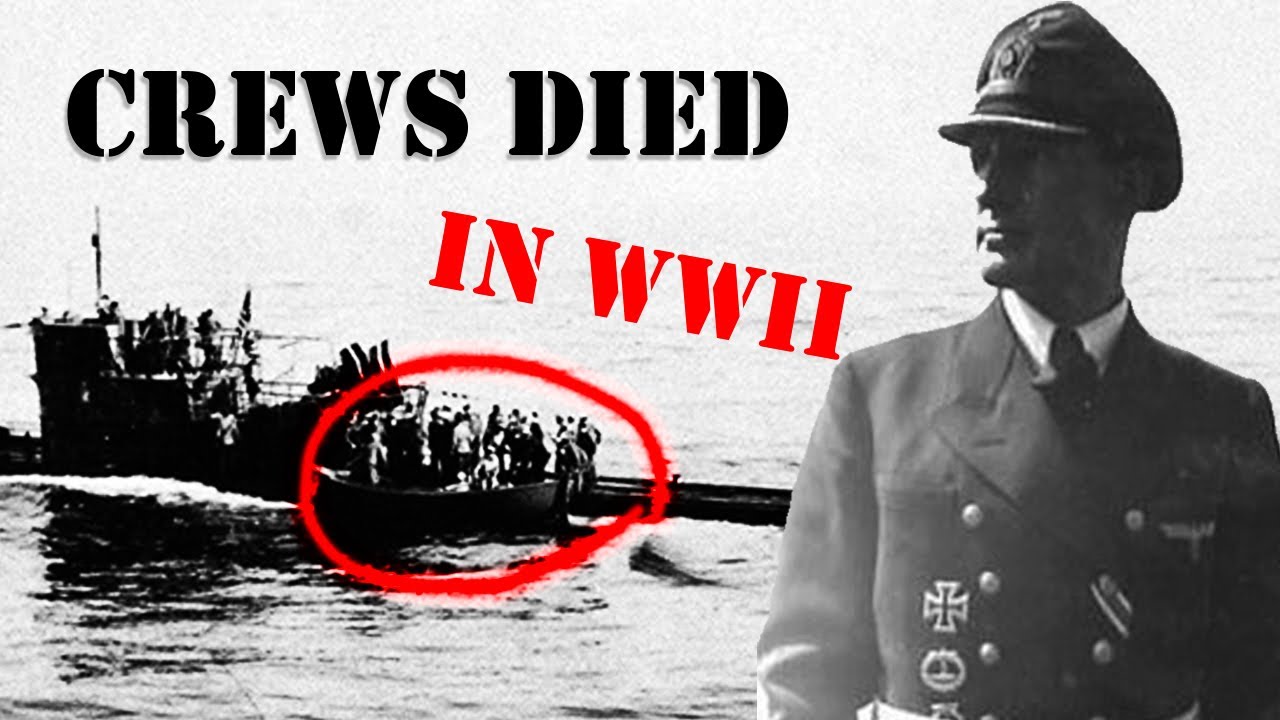
Out of 40,000 men who served aboard German yubot during the Second World War, more than 30,000 never returned. They sank over 2700 Allied vessels, disrupted shipping routes, killed thousands of sailors, and turned the Atlantic into a hunting ground. This is the dark story behind the Yubot, Germany’s most lethal weapon beneath the surface, and easily one of the most terrifying assignments any soldier could ever be given.
Let’s go back to where it all started. Germany’s journey toward undersea warfare began with a lot of trial and error. In 1850, an inventor named Wilhelm Bower drafted plans for their first sort of submarine. The design was ambitious, although far from any sort of modern technology.
Then it was tested, and it sank almost immediately. Somehow, Bower and his two crew members managed to survive the accident, and interest in submarines continued, though slowly.
It wasn’t until the early 20th century that Germany started to take the concept seriously. Looking for ways to challenge Britain’s dominance at sea, as they were unable to match its battleship fleet, German strategists turned to a different kind of naval weapon. Instead of fighting head-on,
they would target commercial shipping. The idea was that if you couldn’t outgun the Royal Navy, you could still starve Britain of resources. By the time World War I erupted, Germany had 28 Yubot ready for combat, and they wasted no time showing what they could do.
Just weeks into the war, U9 torpedoed and sank three British cruisers in under an hour, killing more than 1,400 sailors. That one action made it clear the rules of naval warfare had just changed forever.
Germany’s Silent Fleet
But these early submarines weren’t actually submarines in the sense we know today. For the most part, they sailed on the surface and only submerged when preparing to attack or evade detection. Diesel engines powered them above water and charged onboard batteries.
Then, once submerged, those batteries ran small electric motors, but only for a short time. And since they moved slowly and had limited oxygen, they had to resurface frequently, which was their most vulnerable moment.
At first, German Ubot followed so-called prize rules. They would stop merchant ships, give the crew a chance to abandon ship, and then sink the vessel. But that system fell apart once the British introduced Q ships, which were merchant vessels disguised with hidden weapons. Several Ubot were destroyed this way, and commanders understandably quickly abandoned any idea of fairness.
What followed was unrestricted submarine warfare, meaning any ship, military or civilian, became a target without warning. One of the most devastating examples was the RMS Lucatania. In May of 1915, it was struck by a torpedo from U20 and sank off the coast of Ireland.
Nearly 1,200 people died, including 128 Americans. The attack triggered global outrage, and it played a major role in bringing the United States into the war, which ironically was a huge factor that would eventually tip the scales against Germany.
By the end of World War I, Ubot had sunk over 5,000 ships. But the cost was steep. Nearly 5,000 German submariners were killed and 178 yubot were lost. And this was just the beginning because Germany wasn’t finished.
The “Unsinkable” U-Boat
The next war would push yubot warfare to a new scale, darker and deadlier than anything the world had seen before. After World War I, Germany wasn’t supposed to have submarines at all. The Treaty of Versailles had made that clear along with banning a long list of other weapons, but that didn’t stop them. German naval planners quickly looked for ways around the rules and they found them.
They opened submarine design bureaus in neutral countries and began developing boats for foreign navies. Officially, they weren’t building Ubot for themselves. Unofficially, they were refining every element of the next generation of underwater warfare.
By 1935, the charade ended. Hitler formally rejected the restrictions of Versailles and announced Germany would rearm. Among those pushing hardest for submarine warfare was Admiral Carl Dernitz, who had a new strategy in mind, one that would redefine the Yubot’s role in combat.
Life (and Death) Underwater
Instead of sending submarines out alone, Durnets envisioned groups of Yubot hunting together, coordinating their attacks to overwhelm Allied convoys. This new tactic became known as the Wolfpack. And once it was put into action, Allied shipping would never feel safe again.
Germany’s primary weapon in this campaign was the type 7 Yubot. It became the backbone of the marine. At about 220 ft long, it could sail nearly 9,000 nautical miles without refueling. In theory, it could dive to 750 ft, but that was only for emergencies.
Most of the time, they stayed between 3 and 500 ft. Even then, hulls sometimes groaned and buckled under pressure, and leaks were common.
Hubot were now tasked with a simple sounding mission. Sink every ship that carried fuel, food, weapons, or troops bound for Britain. They cut off the supply lines, crushed the economy, and bring the country to its knees, all with no invasion required. Dozens of Ubot slipped out into the Atlantic, stalking convoys that moved slowly and predictably.
How the Allies Hunted Them
One sunken freighter could mean thousands of tons of cargo lost if it happened to be carrying soldiers even better. And they wasted no time getting started. On the very first day of Britain’s entry into the war, U30 fired on the SS Athenia, a civilian ocean liner.
Over 100 passengers were killed. The German high command later insisted it was an accident, but the message was already out. Civilians were targets, too, and no one crossing the Atlantic could count on being spared.
At first, the Royal Navy didn’t grasp just how serious the threat had become. They assumed the convoy system, combined with sonar and depth charges, would provide enough protection. After all, they’d dealt with in the last war, but this time, German submarines were faster, better organized, and far more aggressive.
By the end of 1939, the ocean floor was already littered with the wrecks of merchant vessels. Every departure became a gamble. Crews knew that even if their ship wasn’t carrying anything important, it could still be marked for destruction, and Admiral Dernitz was only getting started.
During the day, Hubot would lurk beneath major shipping routes. Once a convoy was spotted, they’d track it from a distance using just optics and mathematics to calculate course, speed, and bearing. At night, they’d move in closer. Hubot were also usually armed with a deck gun, which could be used to finish off damaged ships or sink smaller targets without wasting precious torpedoes.
But as Allied air patrols increased, surfacing soon became more and more dangerous. So the bulk of the damage came from torpedoes. Once the firing solution was worked out, the torpedo officer would adjust for angle, spread, and distance, all calculated by hand with no electronics or modern guidance.
When ready, compressed air launched the torpedoes out of the tubes. The G7A models were powered by steam, fast but easy to spot thanks to the long wake they left behind. The G7E, on the other hand, ran on electricity. It was slower but silent and wake-free, perfect for stealth attacks. The downside, on the other hand, was that early versions were notoriously unreliable and could even circle back and hit the yubot which fired it.
A single hubot usually carried up to 14 torpedoes, but only four to six could be loaded at a time, so every shot had to matter. If a spread missed, it could mean revealing their position and inviting retaliation.
When an attack succeeded, the results were horrifying. There were no nearby ports, no quick rescues. Survivors often drifted for days on rafts or in freezing waters, hoping another convoy might spot them before it was too late.
By the time 1941 rolled around, the Yubot threat had gone from a dangerous nuisance to a full-scale strategic crisis. Germany’s submarines were devastating Allied supply routes. In just one year, over 6 million tons of merchant shipping had been sent to the bottom. Britain’s survival now hinged on its ability to protect those convoys. And now the cat and mouse game had officially begun.
Back in 1940, Britain reinstated the convoy system, bundling merchant ships into heavily guarded formations. Admiral Dernitz responded with his now infamous Wolfpack strategy. Yubot would operate in coordinated groups, attacking the same convoy from multiple angles, overwhelming the escorts with sheer volume. And so the escalation began.
When German subs started traveling in packs, the Allies created specialized hunter killer groups to track and eliminate them. By early 1943, all of those counter measures started paying off. The Atlantic had become far more dangerous for the Ubot. That May became known within the German Navy as Black May. In just 4 weeks, 43 yubot were sunk. That translated to a staggering loss rate of 41%.
Life Inside a Yubot
And if you add to each Ubot a crew of around 50 men who went down with it, it’s better not to even imagine how their last seconds might have looked like. Anti-ubmarine warfare had finally caught up. But progress had come through a long costly learning curve.
At the start of the war, the main tool available was the depth charge, a drum-shaped explosive that could be dropped from a ship and set to detonate at a specific depth. Early versions were crude and only deployed from the back of a vessel with no real accuracy.
Later came more sophisticated weapons like the Hedgehog, a forward-firing mortar that launched two dozen small explosives ahead of the ship. Unlike depth charges, which detonated based on depth, hedgehog charges only exploded on contact. That meant ships could attack with greater precision and less risk of alerting the hubot beforehand.
When a depth charge exploded close enough to a submarine, the resulting pressure wave could dent the hull, damage internal systems, or force the boat to the surface. At close range, it could crush a submarine completely.
But it wasn’t just surface ships turning the tide. Aircraft had become a deadly new threat. Long-range patrol bombers were now equipped with radar, spotlights, and depth charges. These aircraft could search vast stretches of ocean and catch Ubot on the surface before they had time to dive.
By 1943, no part of the Atlantic was safe. Submarines that tried to surface risked being spotted from the air. Those that stayed underwater faced sonar equipped escorts and increasingly accurate attacks. Germany’s once terrifying undersea fleet was being pushed into a corner. The hunters were becoming the hunted.
But what made life on a yubot truly brutal wasn’t just the danger outside. It was what happened inside. Life aboard a yubot was, simply put, punishing. Patrols could last up to 12 weeks. And as the missions dragged on, conditions steadily declined.
One of the biggest issues was air quality. Early Hubot didn’t have effective air filtration. Within 24 hours of submersion, the atmosphere would become stale and oxygen levels dropped. Headaches were common and prolonged submersion became dangerous.
About 50 men were packed into less than 50 cubic meters of living area. There weren’t enough bunks for everyone, so the crew hotbunked, taking turns sleeping in shifts. Only the captain had a private space, and even that was barely larger than a closet.
At the start of a patrol, fresh supplies didn’t last long. Within weeks, meals were reduced to dry biscuits, canned meat, and whatever didn’t spoil in the humid air. Water was rationed to about two gallons per man per day for everything from drinking to washing. In practice, bathing didn’t happen.
The heat, sweat, and lack of hygiene led to skin conditions so common they had a name, yubot rot. Sailors suffered rashes, infections, and open sores from the constant damp. One common joke among Allied crews was that you could smell a yubot before you ever saw one. And that was on a good day.
What really wore men down was the constant awareness that death could hide behind the corner at any moment and in ways no one wanted to think about. It’s one thing to fear you’d be shot, but completely another that you might go down into dark depths in a thin can.
Whether caused by damage, mechanical failure, or a miscalculated dive, the result was the same. A rapid descent toward crushed depth. Crews had a name for it, a death dive. The hull creaked under pressure and the steel began to bend. Everyone on board knew what came next.
Water pressure increases rapidly with depth. And if you go too far, the hull simply gives in. When it does, it’s an implosion that flattens the entire craft in a fraction of a second. The only way out was to blow the ballast tanks and hope the boat would level out. But if that system was damaged, or if the dive was already too steep, you’d be waiting just for the inevitable.
And believe it or not, there was something even more terrifying than implosion. Some submarines didn’t go deep enough to be crushed. Instead, they hit the ocean floor in shallow waters. Crews waited in the dark without power and with no way out. In some cases, oxygen simply ran out. In others, cold sea water slowly leaked in, rising inch by inch toward the ceiling. That was the real fear. Not being blown apart, but being trapped alive in a steel coffin, sinking helplessly with nothing to do but wait.
Then there were fires. Inside a yubot, you were surrounded by fuel, batteries, and high explosive torpedoes. If a fire broke out, putting it out was far from simple. Compartments were sealed with pressure doors to prevent flooding or flames from spreading. But those doors worked both ways. If a fire broke out in one section, and the doors had to be shut, anyone left behind was trapped.
These were the choices that had to be made, and crews lived with them. If batteries malfunctioned or were damaged, they could release toxic gases which could turn lethal in minutes.
This is all part of the reason why three out of four of all Yubot personnel didn’t survive the war, going out in one of the most terrifying ways possible.