Vietnam Helicopter Door Gunners: The Untold Story
Have you ever wondered if the people hanging halfway out of helicopters in those old videos ever fell out? Well, spoiler alert, they did. But not because they were stupid enough to forget a safety belt. Door gunners on helicopters in Vietnam are actually a much deeper and often overlooked topic.
Despite being in a way responsible for the entire development of the attack helicopter concept, this is our humble attempt to give them the respect they deserve in this short video and to push back against the AI generated content flooding YouTube and getting everything wrong.
When American helicopters first arrived in Vietnam, they were basically flying taxis operated by a three-man crew, pilot, co-pilot, and crew chief.
Why They Had No Doors
They were used to transport equipment and soldiers. Think of them like cargo trucks that could fly. They weren’t armed. They weren’t armored. And they weren’t ready. The idea was that air mobility alone would give the Americans the upper hand. Get in fast. Drop the troops. Get out. Simple enough. But flying into a combat zone in an unarmed helicopter turned out to be about as safe as it sounds. Almost half of all helicopters deployed in Vietnam ended up crashing.
Enemy fire was a big reason why. After watching defenseless helicopters get shot down at an alarming rate, the military brass started to realize something obvious. Maybe helicopters flying into combat zones should have some way to shoot back.
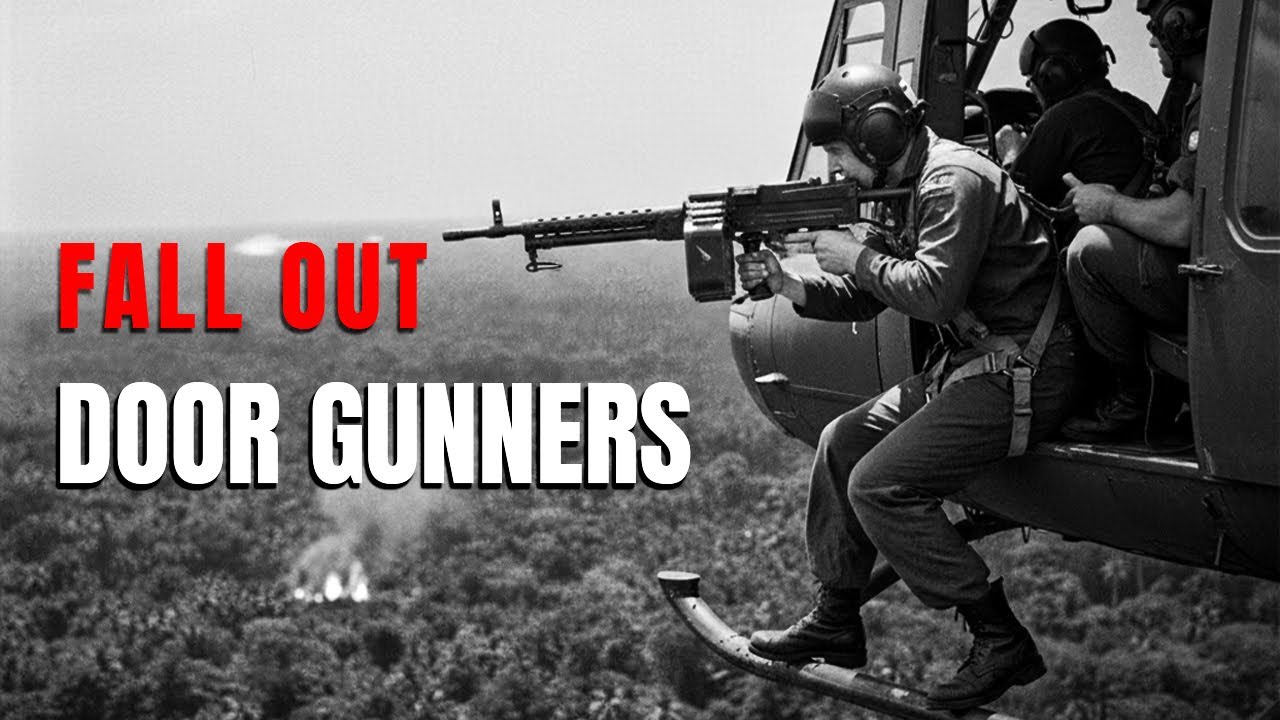
The first fix was improvised and basic. Take the doors off and strap in a crew chief with an M60 machine gun. He would fire from the open doorway while the helicopter banked and swerved through the air. The effectiveness was questionable. The danger to the gunner was not. Still, it was better than nothing. To cover the opposite side of the aircraft, a new position was added. T
he door gunner, famously called the shotgun rider. Besides laying down fire on one flank, the gunner also kept watch over the rotor blades and skids to make sure they stayed clear of obstacles. He was also useful as an extra set of hands during missions, helping load and unload supplies or wounded, maintaining weapons and equipment, and providing heavy suppression when things went bad, which could happen at any time and without warning.
Life as a Door Gunner
Although it might seem like the door gunner was just there to fire into the jungle while fortunate sun played in the background, the role was far more involved. He was trained to work closely with the crew and the aircraft as a unit. Firing from a moving helicopter at targets in the jungle below was far more difficult than it looked. Gunners had to adjust constantly, aiming ahead or behind of where they actually wanted the rounds to land.
That is because bullets fired from a moving helicopter carry the forward momentum of the aircraft and the target was usually moving too. For helicopter crews, there was no such thing as a typical day. As they said, 90% of the time was pure boredom. Hours spent flying over the jungle, staring at nothing. But that other 10%, you would have done anything to be bored again.
Before we even get to combat, consider this. You are hanging out the side of a helicopter flying 100 miles per hour, sometimes just a few meters above the trees. And yes, people did fall out and yes, usually with fatal consequences. However, that kind of incident was rare. Far more often, helicopters went down because of enemy fire, mechanical failure, or what was usually written off as human error, a term that ended up covering a staggering number of accidents.
The standard safety setup was a simple lap belt, basically what you have in a car, but most gunners used the monkey harness instead. It was worn over the torso and anchored to the floor or wall of the aircraft. It let them move around or lean out for a better firing angle while still giving them a chance to survive if they slipped or got thrown out.
The harness was not designed to stop you from falling. It was meant to keep you hanging there long enough for the crew to pull you back in. And if the helicopter took a sharp evasive turn or lost control after being hit, the force could launch you out like a human slingshot.
Were They Actually Strapped In?
The door gunner’s position was the least wanted spot on the aircraft and for good reason. There is a popular saying that a door gunner’s life expectancy in combat was 5 minutes. That number is not exactly reliable, but it gives you the idea. Gunners were in the most exposed position and always a high priority target. The enemy knew who to shoot first. They also suffered the highest casualty rates among helicopter crews and they knew it.
Door gunners took part in every kind of mission, but some stood out for how dangerous they were. Medical evacuations, known as dust offs, were some of the worst. They had to fly into active combat, pick up the wounded and get out. These helicopters were marked with large red crosses, and flew unarmed under the idea that they would be protected by the so-called rules of war.
But since the United States had long abandoned any clean war doctrine using napalm chemical agents and strategic bombing, the other side stopped caring about Red Cross symbols. So dust offs started flying with door gunners. These gunners also helped carry the wounded. Some jumped out under fire to drag injured soldiers back to the helicopter.
And when there were too many to carry in one trip, they had to decide who was stable enough to wait and who needed to be flown out immediately. That decision often meant life or death. They did this over and over, going back and forth between the battlefield and evacuation hospitals.
What Made It So Dangerous?
Bullets tore straight through the helicopter’s skin, and door gunners stood in open doorways with nothing between them and incoming fire. Flack jackets were standard issue, but they were built to stop shrapnel, not AK rounds. Most gunners didn’t wear them anyway. They were too hot, too heavy, and offered little more than a false sense of security.
There were also the so-called chicken plates, ceramic inserts worn over the chest to stop small arms fire. The nickname alone tells you how gunners felt about them. They weighed several pounds, and many chose to leave them behind in favor of speed and mobility.
In the end, the only real protection a door gunner had was firepower and speed. Fly in, do what you came for, and get out fast. The courage it took to do this job day after day, mission after mission is hard to grasp from a civilian perspective.